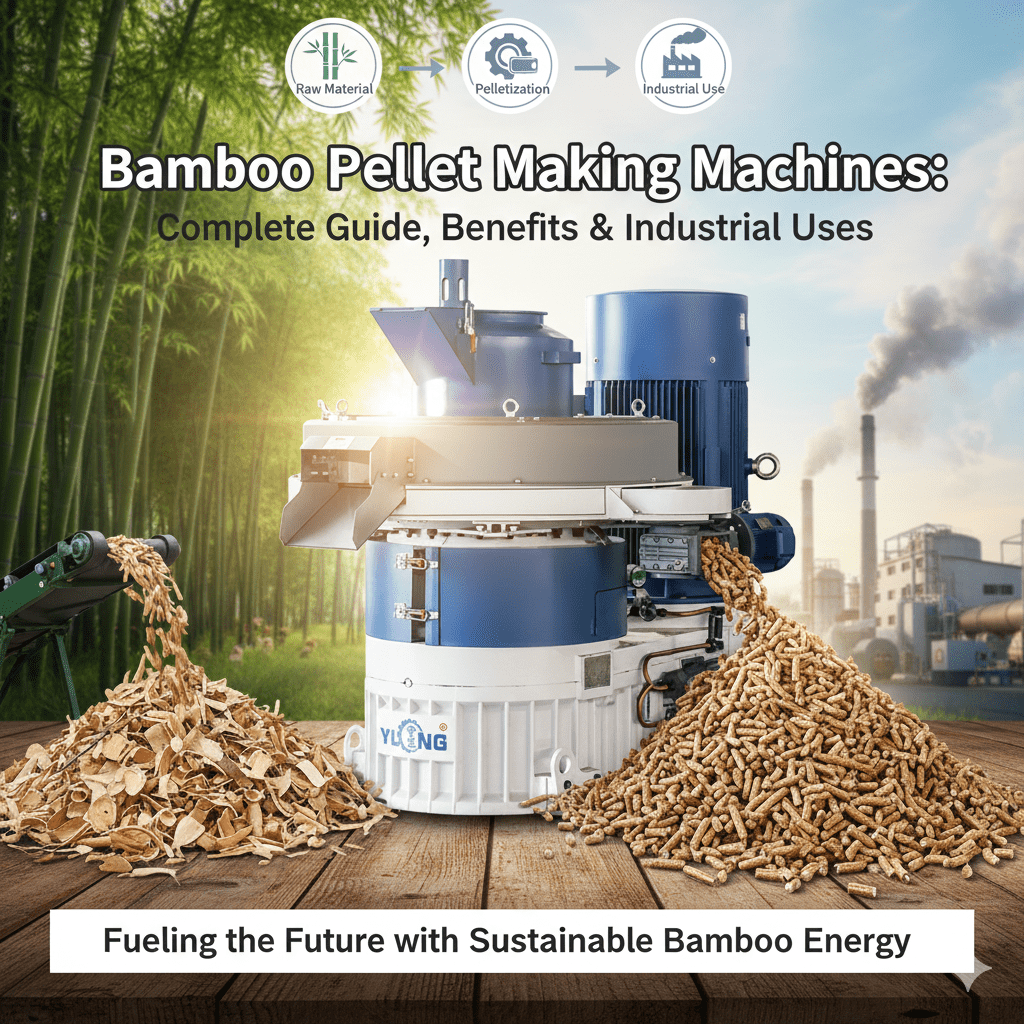
Bamboo is one of the fastest-growing renewable resources on the planet, making it a highly efficient raw material for biomass fuel production. As the demand for clean and sustainable energy rises, bamboo pellets have become a preferred choice for industries, commercial users, and eco-friendly businesses. Bamboo pellet making machines play a crucial role in converting raw bamboo into uniform, high-density pellets used for heating, power generation, and industrial applications.
Bamboo pellet making machines are specialized biomass processing systems designed to crush, dry, and compress bamboo into small, cylindrical pellets. These machines handle various forms of bamboo—sticks, powder, chips, or shavings—and convert them into high-energy fuel that burns cleanly and efficiently.
A typical bamboo pellet production line includes:
• Chipper or crusher for size reduction • Hammer mill to grind bamboo into fine powder • Flash dryer to reduce moisture • Pellet mill (ring die or flat die) to compress powder into pellets • Cooling and screening system • Packing machine for bagging finished pellets
Bamboo offers multiple advantages in pellet manufacturing:
1. Fast renewable growth: Bamboo grows quicker than hardwood trees, ensuring a sustainable supply. 2. High calorific value: Bamboo pellets provide strong heat output, making them suitable for boilers and industrial furnaces. 3. Low ash content: This ensures cleaner combustion and reduced maintenance. 4. Widespread availability in India: Especially in Northeast, South India, and forest-covered regions.
Bamboo pellets are versatile and used across multiple sectors:
1. Industrial Heating
Factories, textile units, chemical plants, and food-processing industries use bamboo pellets in boilers and thermal systems due to consistent heat generation.
2. Biomass Power Plants
Renewable energy power plants use bamboo pellets as an efficient fuel alternative to coal.
3. Commercial Heating
Hotels, restaurants, and commercial buildings use bamboo pellets for water and space heating.
4. Domestic Uses
Pellets are used in pellet stoves for cooking, heating, and eco-friendly fuel needs.
5. Export Markets
Countries like Japan, South Korea, and Europe import bamboo pellets for power generation, creating strong export opportunities.
• High production efficiency • Lower energy consumption • Strong, uniform pellets • Reduced waste—utilizes bamboo residues • High profitability for entrepreneurs
• Required production capacity (100 kg/hr to 5 tons/hr) • Type of die (ring die preferred for commercial production) • Moisture requirements • Power consumption • Brand reliability and after-sales service
A complete bamboo pellet plant is ideal for medium to large industries, while smaller pellet mills suit local businesses and startups.