- December 15, 2025

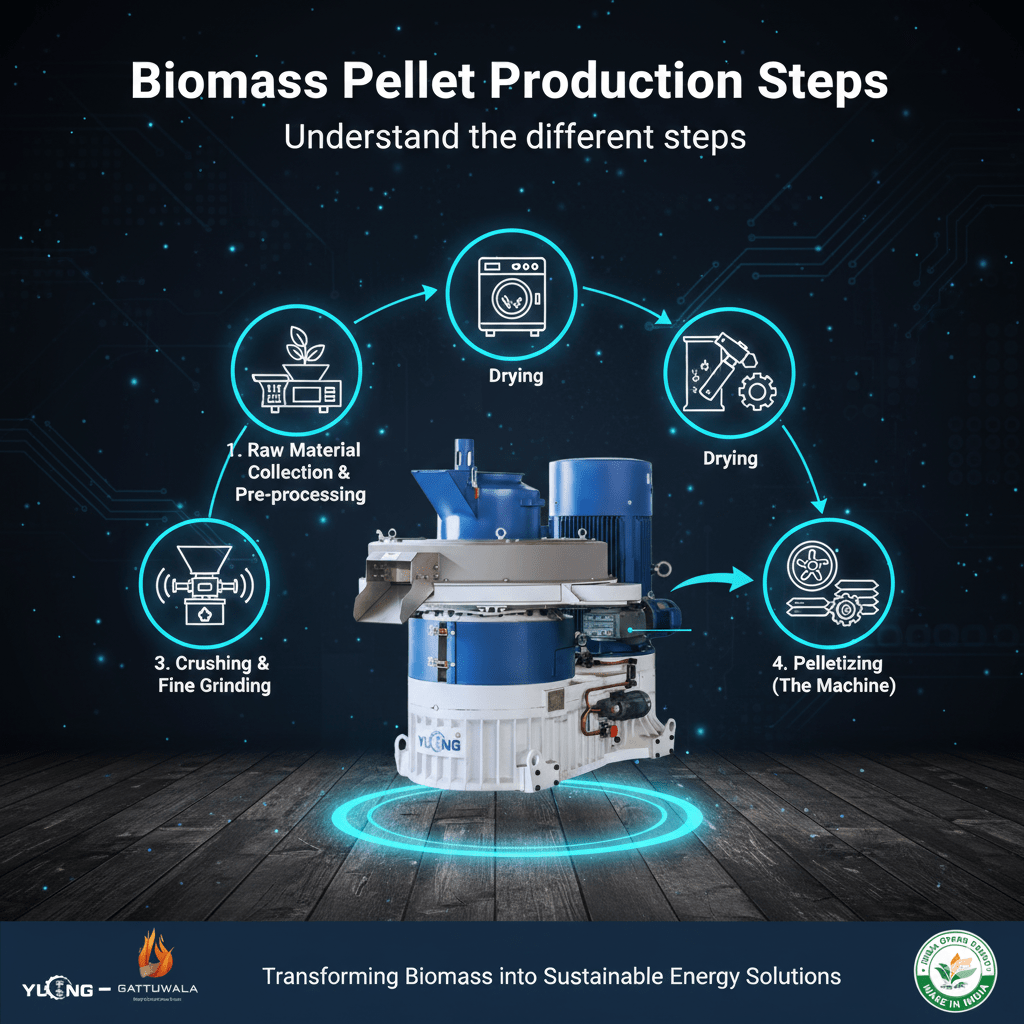
Biomass pellets have become one of the most preferred renewable fuel options for industries and power plants. Made from agricultural and forestry waste, pellets offer high energy density, easy handling, and lower emissions compared to fossil fuels. To achieve consistent pellet quality, it is important to clearly understand the biomass pellet production steps. This article explains each stage of the pellet manufacturing process in detail, helping new entrepreneurs and industry professionals gain practical insights.
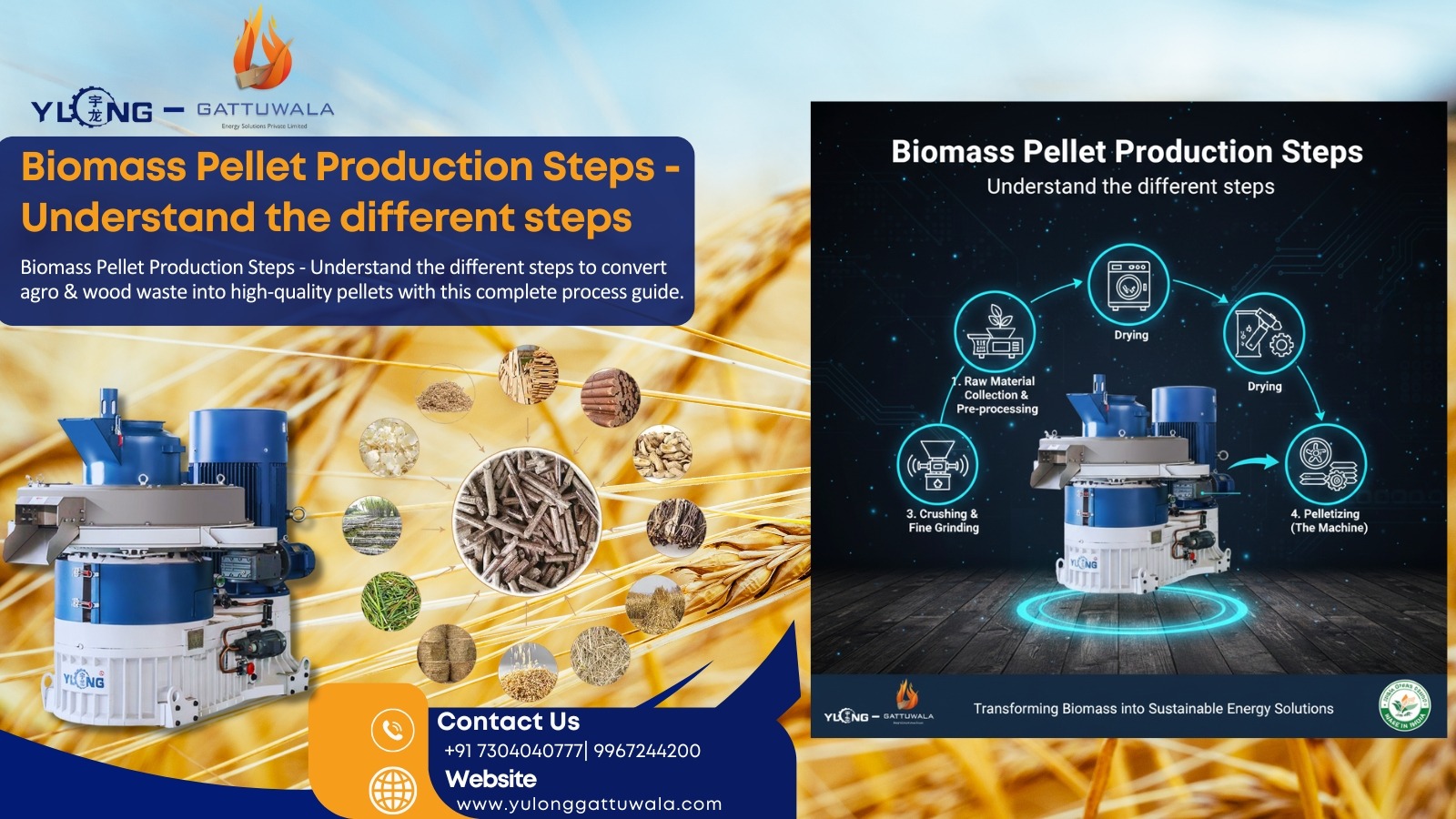
The first step in biomass pellet production is selecting the right raw materials. Common biomass materials include:
- Rice husk
- Sawdust
- Wood chips
- Groundnut shell
- Mustard stalk
- Cotton stalk
- Bamboo waste
- Sugarcane bagasse
The raw material should be free from stones, metals, and other impurities to protect machinery and ensure pellet quality.
Most raw materials are bulky and irregular in size. They must be reduced to a uniform particle size before pelletizing. This is done using a hammer mill or crusher.
- Ideal particle size: 3–5 mm
- Ensures uniform compression
- Improves pellet density and durability
Proper grinding is crucial for smooth pellet formation and reduced power consumption.
Moisture content plays a key role in pellet quality. High moisture leads to weak pellets, while very low moisture increases energy consumption.
- Ideal moisture level: 8–12%
- Drying methods: flash dryer, rotary dryer, or belt dryer
Drying helps achieve strong, crack-free pellets and increases machine efficiency.
This is the core step in biomass pellet production. The dried and ground biomass is fed into a pellet machine (pellet mill).
How Pelletizing Works:
- Material is compressed through a die
- Heat and pressure activate natural lignin
- Biomass binds without chemical additives
- Cylindrical pellets are formed
Pellet machines can be ring die or flat die, depending on production capacity.
Freshly produced pellets are hot and soft. Cooling is necessary to increase pellet hardness and prevent breakage.
- Cooling temperature: ambient level
- Equipment used: pellet cooler
- Improves pellet strength and shelf life
Cooling also reduces moisture condensation during storage.
After cooling, pellets pass through a vibrating screen to separate fines (dust and broken pellets).
- Ensures uniform pellet size
- Improves appearance and quality
- Fines are recycled back into the process
This step is important for meeting industrial and power plant specifications.
- Moisture content below 10%
- Uniform diameter and length
- High calorific value
- Low ash content
- High mechanical durability
Maintaining consistency in each production step ensures these standards are met.
Knowing each step helps manufacturers:
- Improve pellet quality
- Reduce machine wear
- Lower production costs
- Meet tender and industrial requirements
- Increase plant efficiency
Proper process control also helps in scaling production and entering export markets.
Understanding the biomass pellet production steps is essential for anyone planning to enter the pellet manufacturing business. From raw material selection to packaging, each stage plays a vital role in producing high-quality pellets. With the right equipment, process control, and knowledge, biomass pellet production can become a profitable and sustainable business opportunity.

Pellet Machine Manufacturers in All States of India

Pellet Machine: Complete Guide to Biomass Pellet Production in India


Babu
December 20, 2025I want pellets machine from heard bamboos to convert pallets , what’s systems adapting of lands and what’s points details send