- March 12, 2026
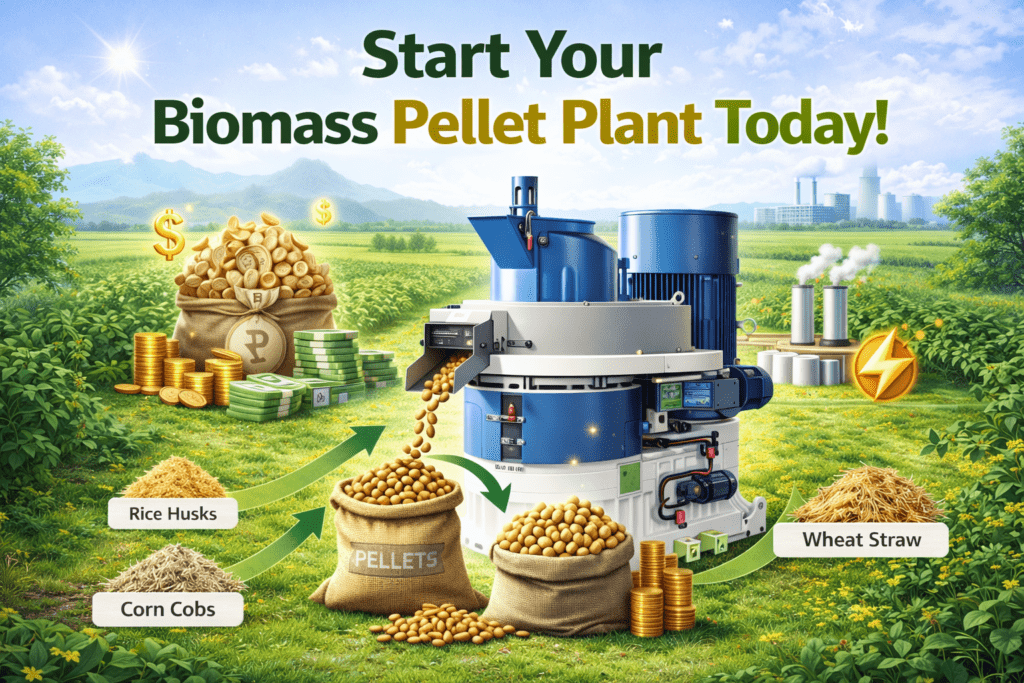
The demand for clean and renewable energy is growing rapidly across the world. Industries, power plants, and manufacturing units are looking for eco-friendly fuel alternatives to reduce pollution and meet environmental regulations. One of the most promising solutions is biomass fuel pellets, which are produced from agricultural waste and wood residues. If you are looking for a profitable and sustainable business opportunity, now is the perfect time to start your biomass pellet plant today.
In a country like India, agricultural activities generate huge amounts of crop residue such as rice husk, wheat straw, mustard husk, and sugarcane bagasse. Instead of burning this waste and causing air pollution, it can be converted into valuable fuel pellets using modern biomass pellet machines.
A biomass pellet plant is a production facility where agricultural waste or wood materials are processed and compressed into small cylindrical pellets. These pellets are high-density fuel that can be used as an alternative to coal in industries, boilers, and power plants.
The pellets are produced using specialized machinery known as pellet machines. These machines compress biomass materials under high pressure and temperature, forming compact pellets without the need for chemical binders.
One of the biggest advantages of starting a biomass pellet plant is the easy availability of raw materials. Agricultural and forestry waste can be used to produce pellets, including:
• Rice husk
• Wheat straw
• Paddy straw
• Corn cobs
• Cotton stalk
• Groundnut shells
• Sawdust and wood chips
• Sugarcane bagasse
These materials are widely available in rural and industrial areas and are often considered waste. By converting them into pellets, entrepreneurs can create a valuable product while helping reduce environmental pollution.
Setting up a biomass pellet plant involves several steps that ensure efficient production and high-quality pellets.
- Raw Material Collection
Agricultural residue or wood waste is collected from farms, rice mills, sawmills, or processing units.
- Crushing and Grinding
Large biomass materials are processed through a crusher or hammer mill to reduce them into smaller particles suitable for pelletizing.
- Drying Process
The moisture content of biomass must be controlled for efficient pellet production. If the raw material contains high moisture, it is dried using a biomass dryer.
- Pelletizing Process
The prepared biomass is fed into the pellet machine where rollers press the material through a die to form dense cylindrical pellets.
- Cooling and Packaging
Fresh pellets are hot and soft when they come out of the machine. They are cooled using a pellet cooler and then packed for storage and transportation.
Applications of Biomass Pellets
Biomass pellets are widely used across various industries as a clean and renewable fuel source. Some common applications include:
• Thermal power plants for biomass co-firing
• Industrial boilers and furnaces
• Textile and chemical industries
• Food processing units
• Brick kilns and manufacturing industries
Many industries are now replacing coal with biomass pellets to reduce carbon emissions and meet environmental regulations.
Why Start a Biomass Pellet Plant?
There are several reasons why starting a biomass pellet plant can be a smart business decision today.
Growing Demand for Biomass Fuel
Industries and power plants are increasingly adopting biomass pellets as a sustainable fuel alternative.
Abundant Raw Materials
Agricultural waste is easily available in large quantities, especially in farming regions.
Government Support
Renewable energy projects and biomass fuel initiatives are encouraged by government policies in India.
Profitable Business Opportunity
With increasing demand and limited production capacity, biomass pellet manufacturing offers strong long-term business potential.
Starting a biomass pellet plant is not only a profitable business opportunity but also a step toward a cleaner and more sustainable future. By converting agricultural waste into renewable fuel, entrepreneurs can contribute to environmental protection while building a successful business.
If you are planning to enter the renewable energy sector, now is the right time to start your biomass pellet plant today and take advantage of the growing demand for eco-friendly fuel solutions.