
- February 14, 2026
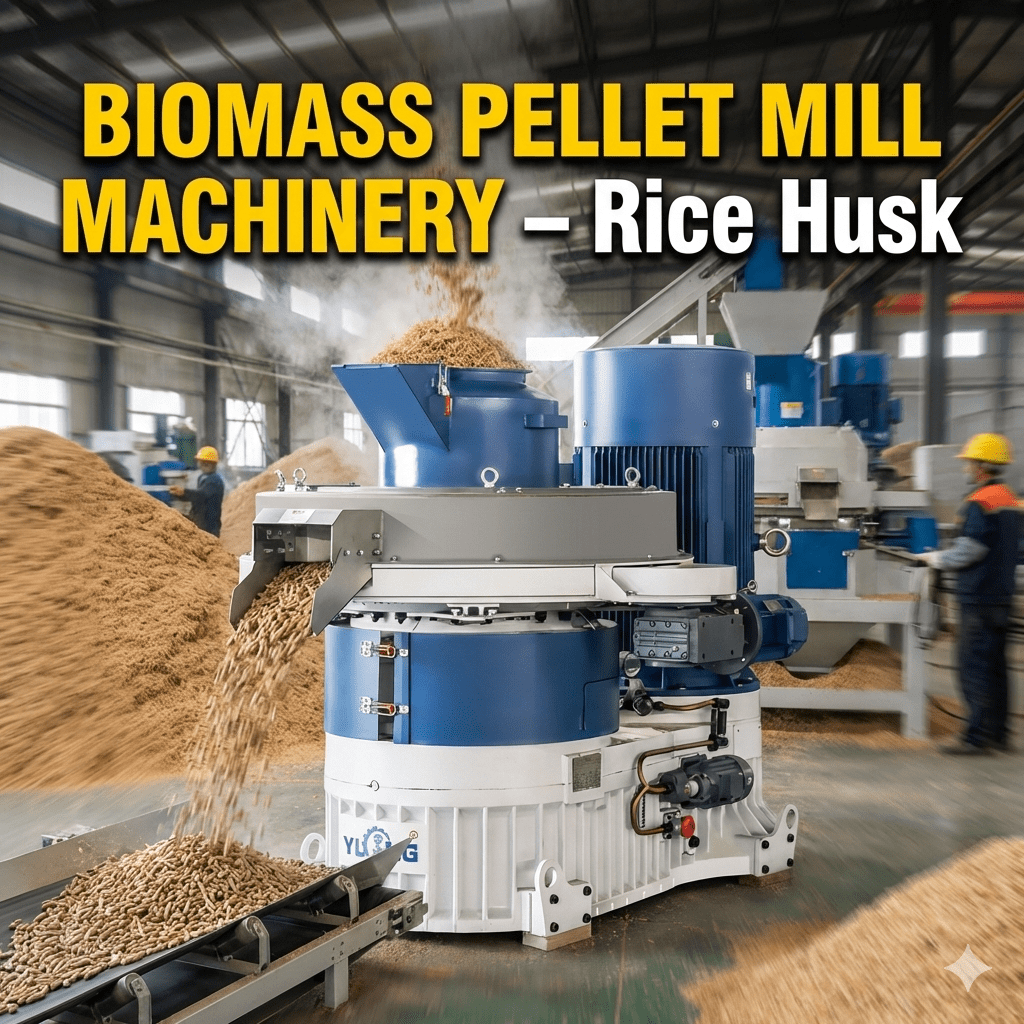
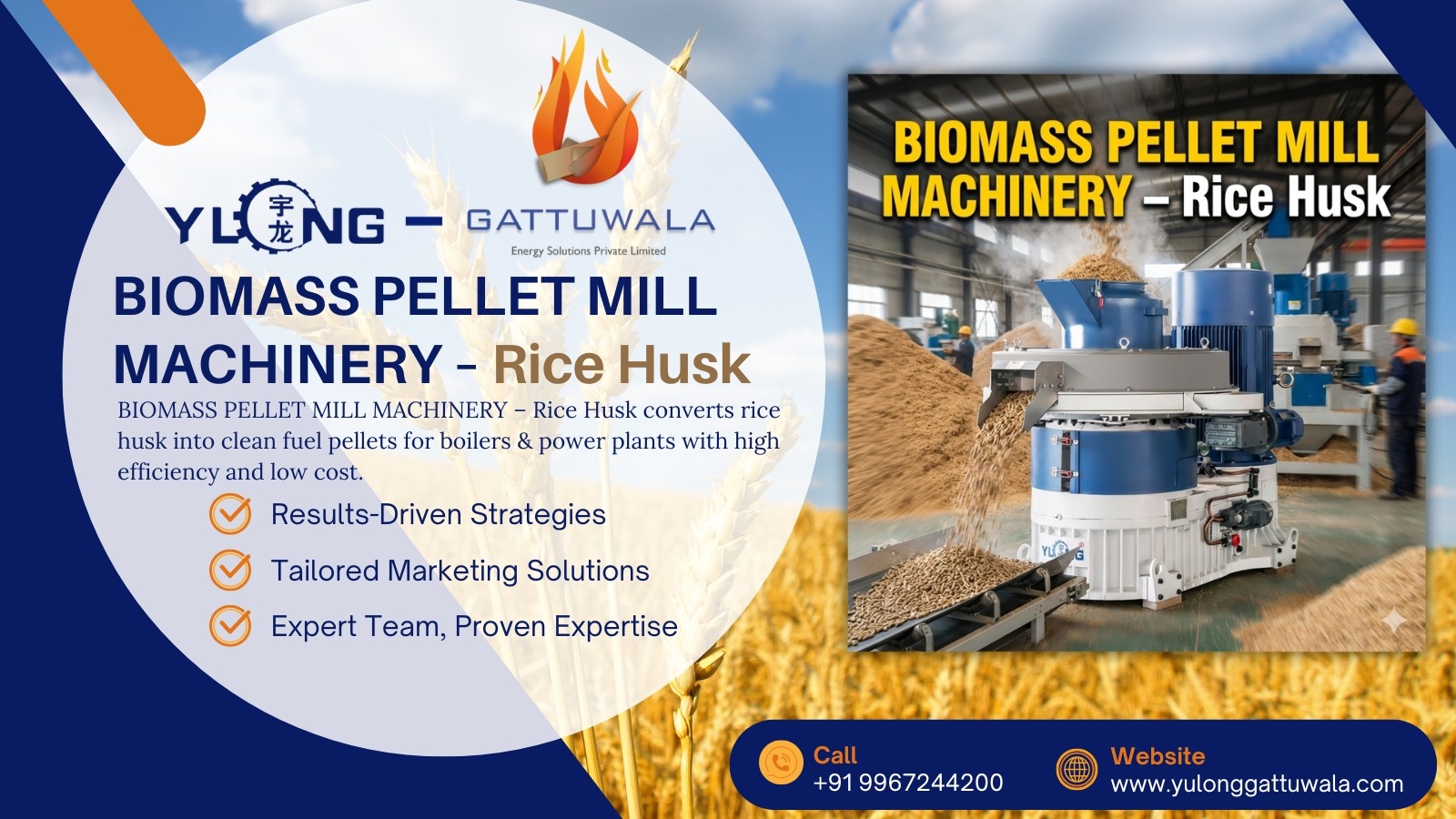
India produces millions of tonnes of rice husk every year as a by-product of paddy milling. Traditionally treated as waste, rice husk is now emerging as a valuable biomass fuel thanks to advanced biomass pellet mill machinery. Converting rice husk into pellets not only solves disposal issues but also supports India’s clean energy and carbon-reduction goals.
Rice husk is abundantly available in rice-producing states such as Punjab, Haryana, Uttar Pradesh, West Bengal, and Andhra Pradesh. It has a decent calorific value and consistent availability, making it suitable for large-scale pellet production.
However, raw rice husk has low bulk density, high ash content, and poor combustion efficiency. This is where rice husk pellet mill machinery plays a crucial role—compressing loose husk into dense, uniform pellets that burn efficiently in boilers and power plants.
Biomass pellet mill machinery is a complete system designed to process rice husk into solid fuel pellets. A typical rice husk pellet plant includes:
• Raw material handling system
• Size reduction (if required)
• Drying system (to control moisture)
• Pellet mill machine with hardened ring die
• Cooling and screening system
• Packing and storage setup
Each machine is engineered to handle the abrasive nature of rice husk and ensure long service life with safe, continuous operation.
- Collection & Feeding
Rice husk is collected from rice mills and fed into the system using conveyors or silos. - Moisture Control
Optimal moisture (10–12%) is maintained to ensure strong pellet bonding and safe machine operation. - Pelletizing
The pellet mill compresses rice husk under high pressure using a ring die and rollers, forming uniform pellets. - Cooling & Screening
Hot pellets are cooled, hardened, and screened to remove fines. - Packing & Dispatch
Finished pellets are packed in bags or sent in bulk to power plants and industrial users.
Rice husk pellets are widely used across industries, including:
• Thermal power plants (biomass co-firing with coal)
• Industrial boilers
• Cement plants
• Textile and food processing units
• Steam and heating applications
With NTPC and other utilities promoting biomass co-firing, demand for rice husk pellets is rising rapidly.
• Converts low-value waste into high-value fuel
• Reduces open burning and air pollution
• Supports renewable and sustainable energy goals
• Ensures consistent pellet quality and size
• Suitable for continuous industrial operation
• Lower fuel cost compared to fossil fuels
Modern pellet machines are also designed with safety interlocks, dust control, and automation to meet industrial safety standards.
Choosing the Right Rice Husk Pellet Machine Manufacturer
When selecting biomass pellet mill machinery for rice husk, consider:
• Experience with rice husk-specific designs
• High-quality ring dies and gearboxes
• Automation and safety features
• After-sales service and spare availability
• Support for plant design, ROI, and subsidies
A reliable manufacturer helps ensure long machine life, safe operation, and faster project returns.
Future of Rice Husk Pellet Plants in India
With government support, NTPC tenders, and growing demand for clean fuels, rice husk pellet plants offer strong long-term potential. Investors and industries are increasingly adopting biomass pellet mill machinery for rice husk as a profitable and environmentally responsible solution.
BIOMASS PELLET MILL MACHINERY – Rice Husk represents a powerful opportunity to convert agricultural residue into clean, usable energy. With the right machinery, proper design, and professional support, rice husk pellet plants can deliver sustainable profits while contributing to India’s green energy mission.

BIOMASS PELLET MILL MACHINERY – Parali (Paddy Straw)
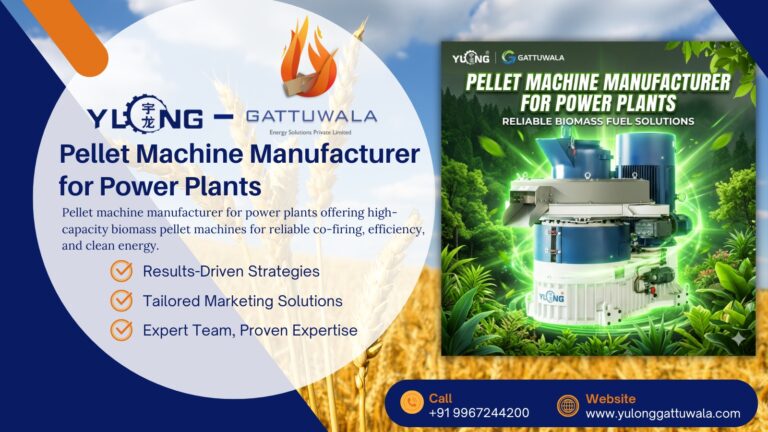
Pellet Machine Manufacturer for Power Plants