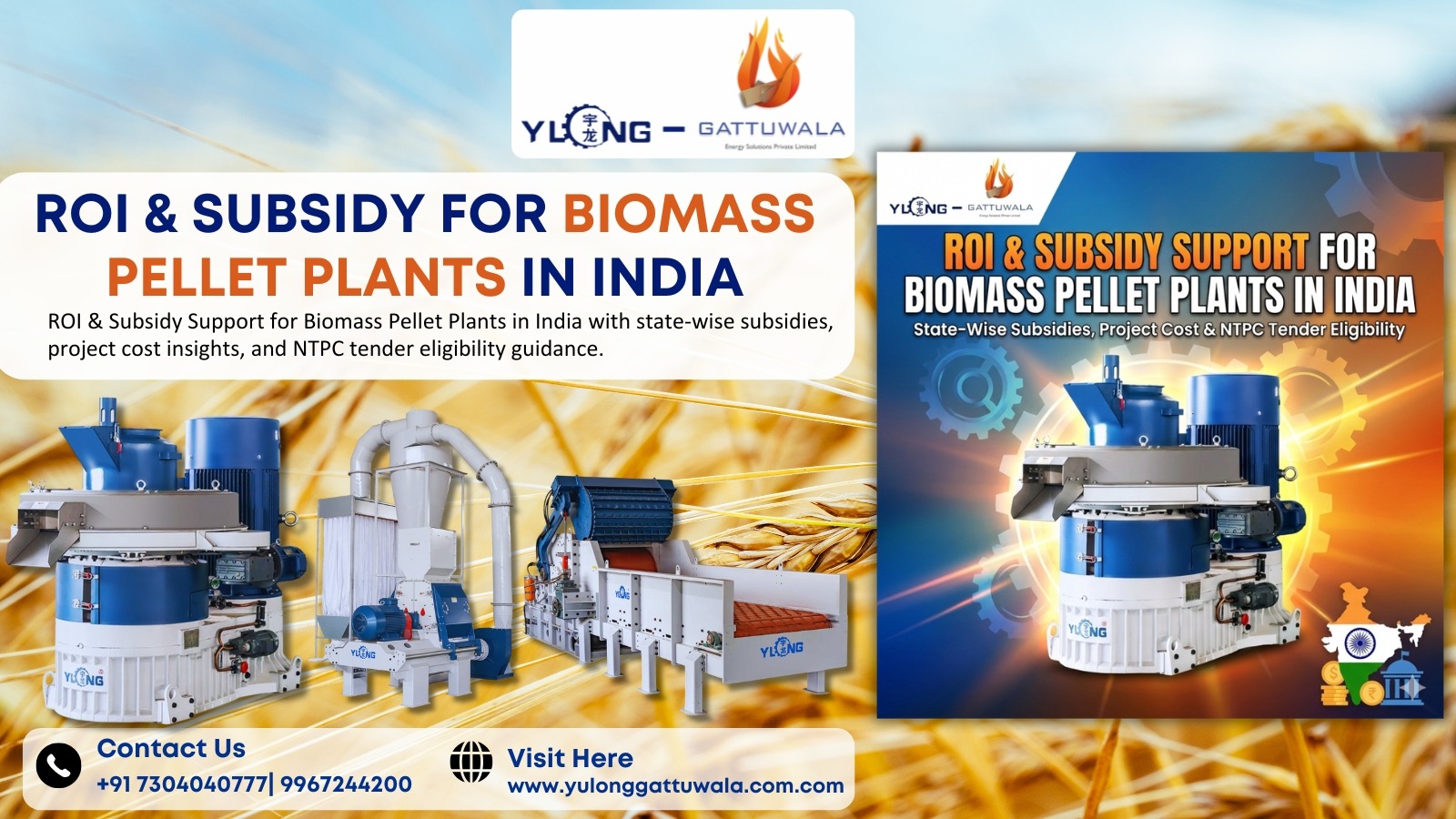
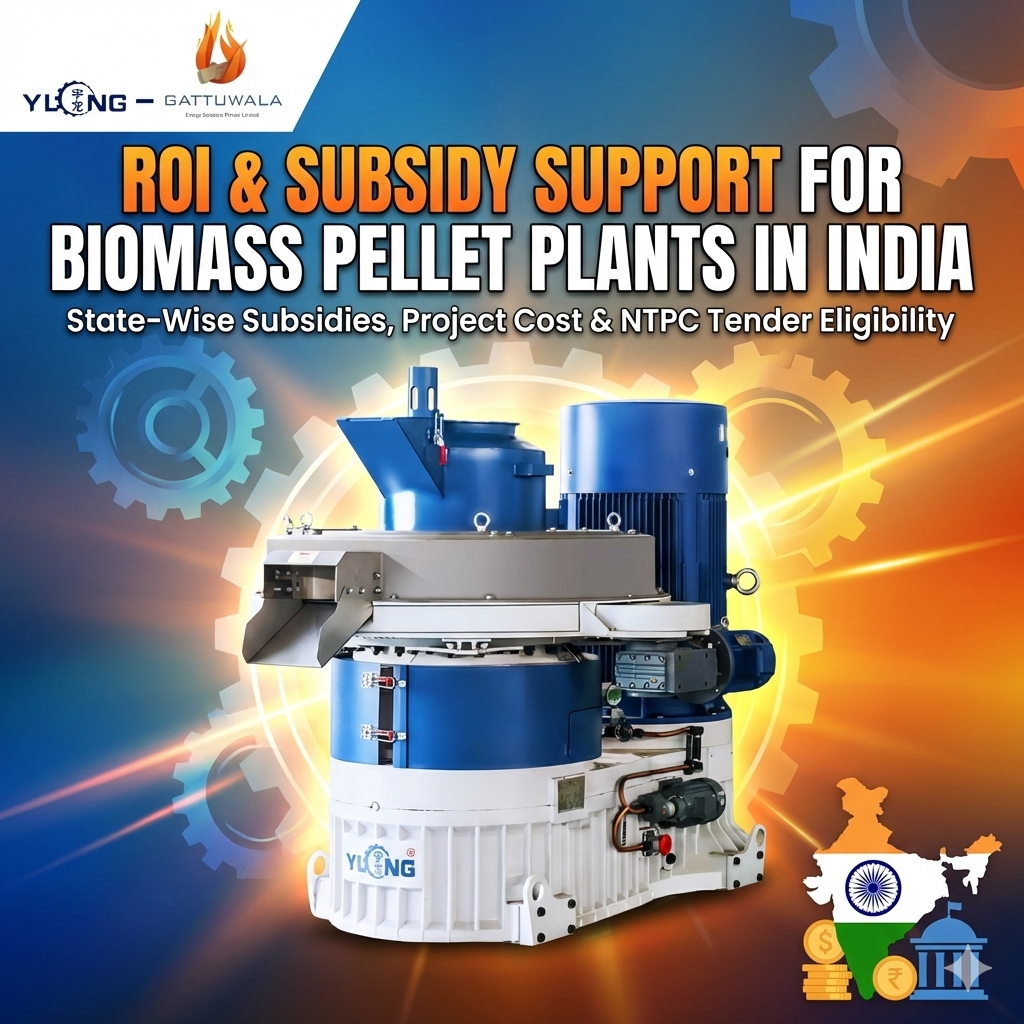
Biomass pellet plants are becoming one of the most profitable renewable energy businesses in India. With increasing demand from power plants, industries, and government-backed biomass co-firing programs, entrepreneurs are actively exploring ROI & subsidy support for biomass pellet plants in India. Understanding returns, state-wise subsidies, project cost, and NTPC tender eligibility is the key to long-term success.
With stable demand and proper plant utilization: 👉 ROI is usually achieved within 18 to 30 months Large plants supplying to power utilities may achieve faster payback.
The Government of India actively supports biomass pellet production to reduce coal dependency and stubble burning.
Central Government Support
• MNRE schemes for biomass energy projects
• Priority lending for renewable energy
• Support for clean fuel manufacturing
State-Wise Subsidy Details
Each state offers different incentives based on industrial and renewable energy policies, such as: • Capital subsidy for MSMEs
• Electricity duty exemption
• Interest subsidy on bank loans
• Land cost and stamp duty benefits
States like Punjab, Haryana, Uttar Pradesh, Maharashtra, Odisha, Gujarat, and Madhya Pradesh actively promote biomass pellet units due to high agro-waste availability.
Pellet Plant Project Cost Calculator (Basic Idea)
While exact costs vary, project cost depends on:
• Production capacity (tons per day)
• Level of automation
• Type of pellet machine (flat die or ring die)
• Dryer requirement based on moisture content
A proper project cost calculator helps estimate:
• Capital investment
• Monthly operating cost
• Expected revenue
• ROI and break-even period
Professional project planning avoids cost overruns and improves profitability.
NTPC Tender Eligibility Guidance
NTPC and state power plants regularly float biomass pellet tenders under biomass co-firing policies.
Basic Eligibility Requirements
• Registered firm or MSME
• Pellet quality compliance (GCV, moisture, ash)
• Adequate production capacity
• Ability to supply consistent quantity
Long-term NTPC tenders provide assured demand and stable income for pellet manufacturers.
Why Professional Support Matters
Setting up a biomass pellet plant involves technical, financial, and regulatory planning. Expert guidance helps with:
• DPR preparation
• Subsidy application support
• Bank loan documentation
• Tender eligibility and compliance
ROI & subsidy support for biomass pellet plants in India make this business highly attractive. With state-wise incentives, growing industrial demand, and NTPC tender opportunities, biomass pellet manufacturing offers strong profitability and long-term sustainability. Proper planning, right machinery, and expert support ensure faster ROI and business growth in India’s clean energy sector.