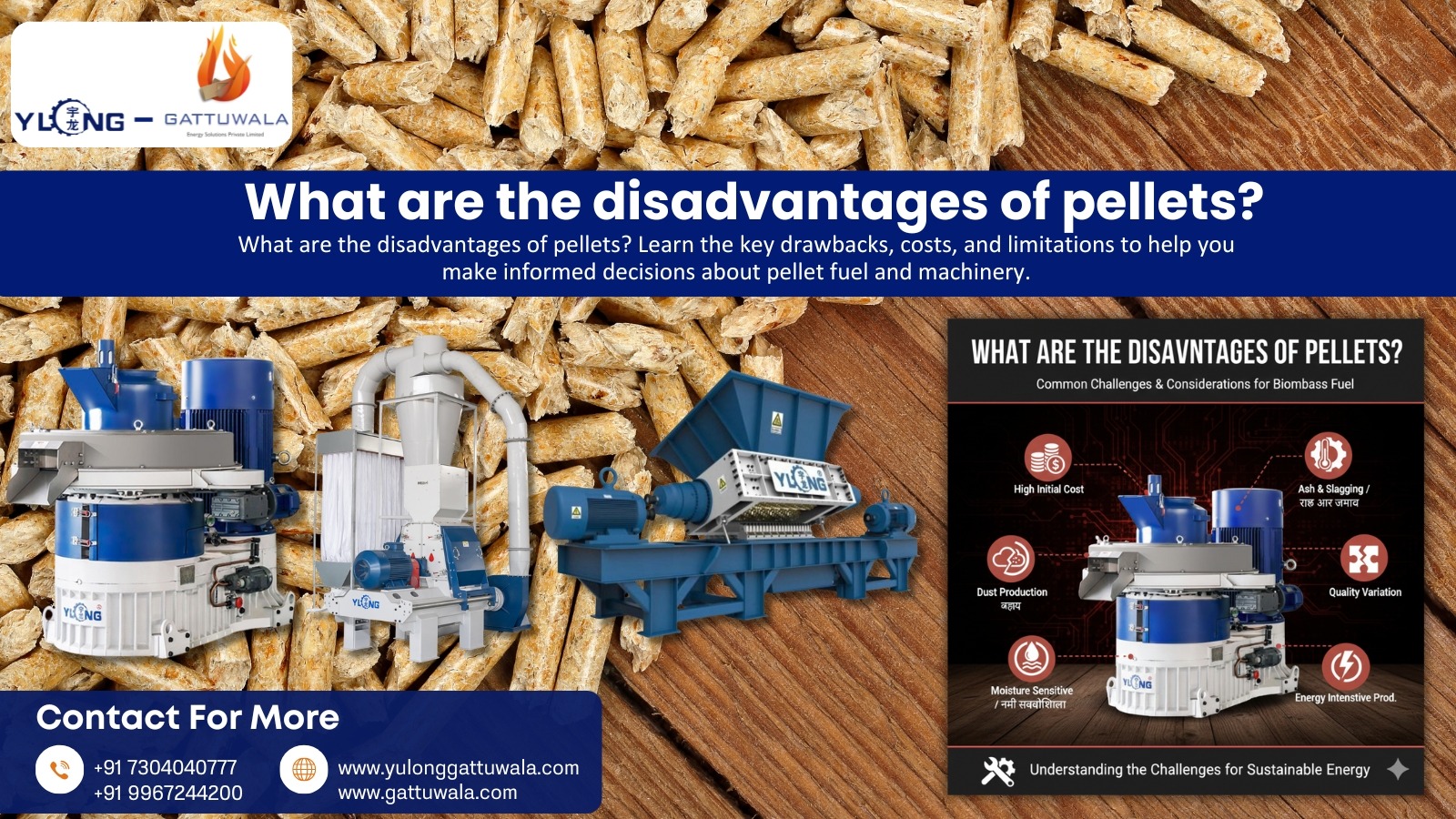
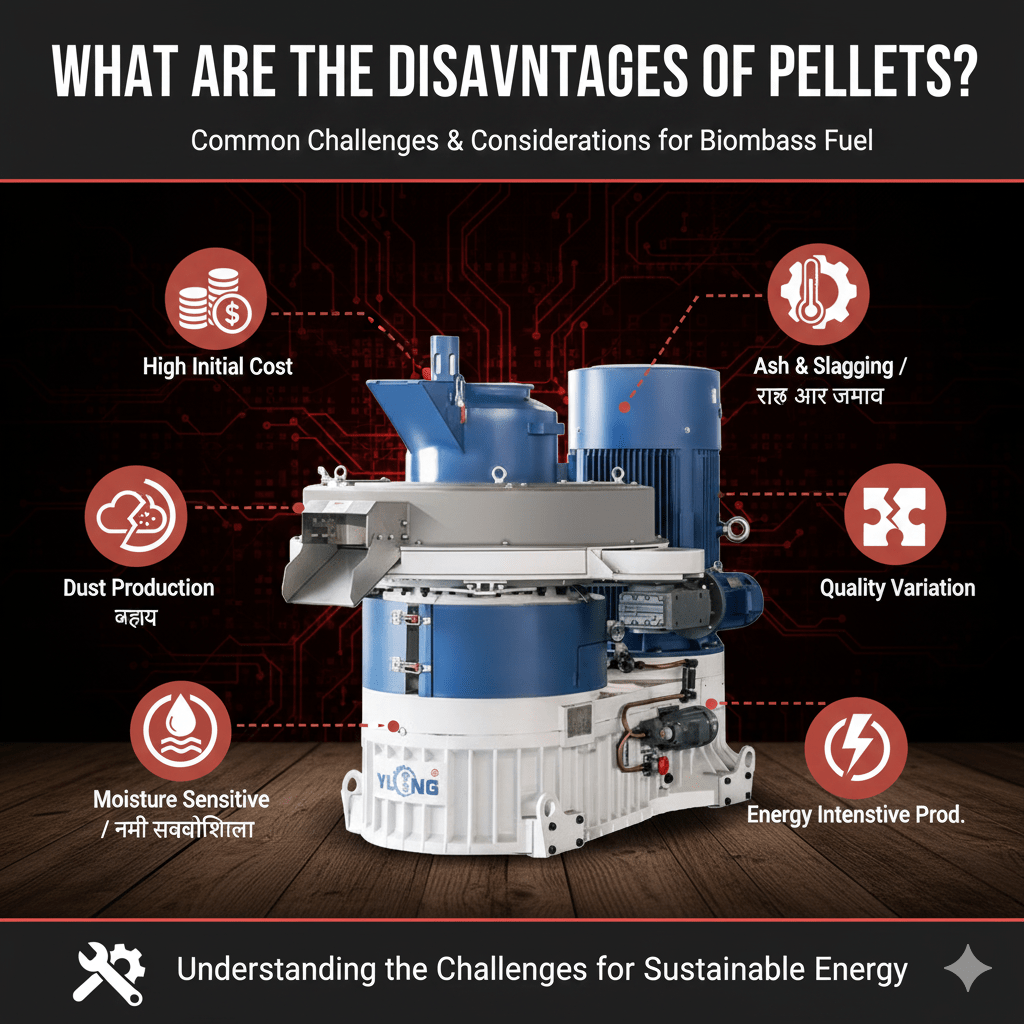
Pellet fuel—whether biomass pellets or wood pellets—is a fast-growing renewable energy source used in industries, hotels, commercial boilers, and residential heating systems. While pellets offer many advantages such as high calorific value, low emissions, and cost savings, they also have certain disadvantages that buyers and new entrepreneurs should understand. Knowing these drawbacks helps in better planning, investment decisions, and long-term operational success.
Below are the most important disadvantages of pellets, explained in detail.
Starting a pellet manufacturing unit requires investing in machines like:
• Pellet mill • Hammer mill • Dryer • Conveyor systems • Cooling system
Even small pellet units can require ₹5–15 lakhs, and larger plants can cost ₹50 lakhs to ₹2 crores. This upfront investment becomes a drawback for small entrepreneurs.
Pellet production involves grinding, drying, and compressing biomass at high pressure. Machines such as dryers and pellet mills consume significant electricity or diesel. This increases:
• Operational costs • Per-ton production cost • Break-even period
For startups, energy cost becomes one of the biggest disadvantages.
If raw material is not properly dried or ground, the pellet quality drops. Low-quality pellets:
• Burn faster • Create more ash • Give poor heating output
This can affect customer satisfaction and reduce repeat orders.
While pellets are a highly effective and clean fuel alternative, they also come with several disadvantages including high initial investment, raw material dependency, moisture issues, storage challenges, and skill requirements. Understanding these drawbacks helps manufacturers build a more efficient and profitable pellet business.
📞Interested in setting up a biomass pellet plant in India? Contact Gattuwala Energy for expert consultation, equipment, and government subsidy support.